 marygans
AI Solution Accelerators
a conversational AI agent for customer care, plus four more AI agent accelerators shipped to production
AI Solution Accelerators
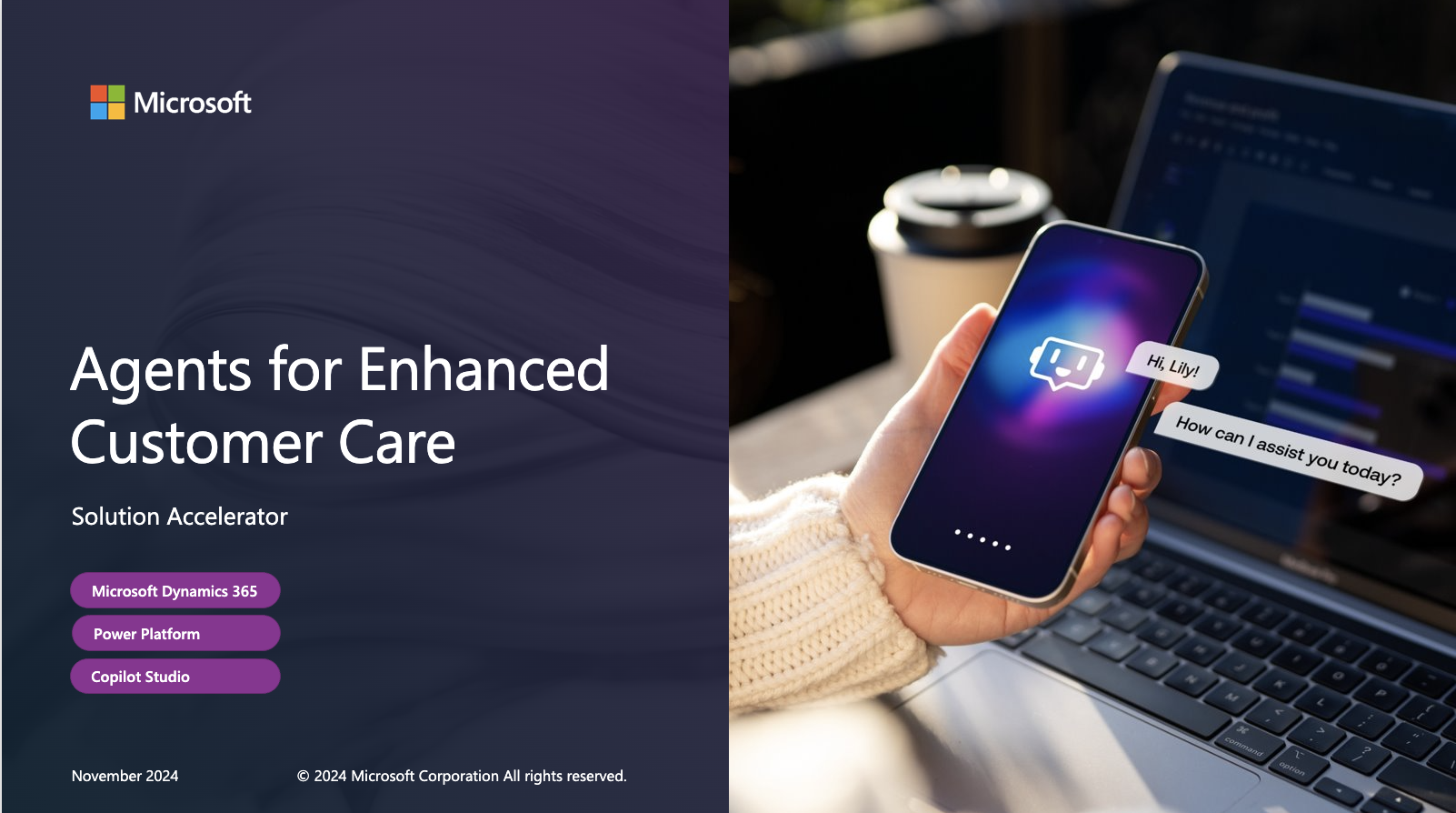
Accelerating agentic AI adoption
Solution accelerators are pre-built, open-source solutions designed to prove out agentic AI value quickly. They give partners and customers an incubation platform for common industry scenarios: adaptable starting points rather than one-off demos, built on Copilot Studio, Power Platform, and Microsoft Teams.
I was design lead across five of these accelerators, each targeting a different enterprise workflow: contract processing, RFP response, customer care, HR self-service, and legacy code modernization. Every accelerator followed the same repeatable Definition → Design → Packaging methodology and shipped to a public GitHub repository for customers and partners to deploy directly. Reusing that framework meant each new accelerator started from proven scenario templates and interaction patterns instead of a blank page, which shortened the path from kickoff to shippable prototype and kept design debt from piling up across the program.
My Contribution
Across the five accelerators, my contribution spanned product definition, use case definition, workflow UX optimization, AI UX, and presentation design, from scoping which enterprise workflow each accelerator would target, to shaping the assistant’s moment-to-moment interactions, to packaging the finished work for stakeholders and partners.
My Approach
Designing for agentic AI means getting specific: defining a single use case, a persona, and the narrative and interaction devices needed to make an AI agent’s capabilities legible to the person relying on it. Across all five accelerators, I helped define the end-to-end user journey, creating AI-driven assistants that balanced automation with transparency through scenario design, persona development, and journey mapping, then explored how Teams-based interactions could trigger the right workflow with minimal friction.
A Repeatable Framework
Every accelerator ran through the same Definition → Design → Packaging methodology. Decisions made on one accelerator (persona templates, journey structures, escalation patterns) carried forward into the next, so I spent less time re-solving the same design problems and more time on what was actually novel about each use case.
Phase 1
Definition
Phase 2
Design
Phase 3
Packaging
Deep Dive: Agents for Enhanced Customer Care
The Challenge
Contact centers built on legacy, on-premise infrastructure struggle to keep pace with rising customer expectations. Self-service is inconsistent across digital and voice channels, pushing customers into cumbersome phone menus or premature escalations. Representatives lack access to integrated knowledge and contextually relevant data, which leads to inaccurate responses and heavier caseloads, and both sides are working with less real-time, actionable insight than the situation calls for.
Legacy On-Premise Infrastructure
Inconsistent self-service across digital and voice channels forces customers into cumbersome phone menus or premature escalation.
Knowledge & Data Management
Limited access to integrated knowledge and contextually relevant data leads to inaccurate responses and heavier representative workload.
Rising Customer Expectations
Customers expect seamless communication, minimal wait times, and faster resolutions, requiring new processes and systems.
Lack of Actionable Insight
Limited ability to contextualize real-time input against historical profile data reduces resolution options.
Product Definition
This accelerator is dual-sided: it has to work for the customer calling in and for the representative handling the case. I helped define both personas and map each one’s needs to a distinct set of agent capabilities.
“I want to resolve my connectivity issues as quickly and easily as possible, so I can get back to work.”
“I want to effectively assist customers with their inquiries so that I can enhance their satisfaction and loyalty.”
Self-Service via Voice Channel
- Resolves issues requiring complex conversations
- Determines the best action based on context
- Assists through process orchestration for task execution
Representative Enablement
- Real-time AI-driven insights
- Access to specialized knowledge and line-of-business applications through natural language
Built on Dynamics 365 Contact Center and Dynamics 365 Customer Service, with agents built and customized in Copilot Studio and extended into Power Platform and existing applications.
The Journey: Copilot Studio Voice & Chat Agent
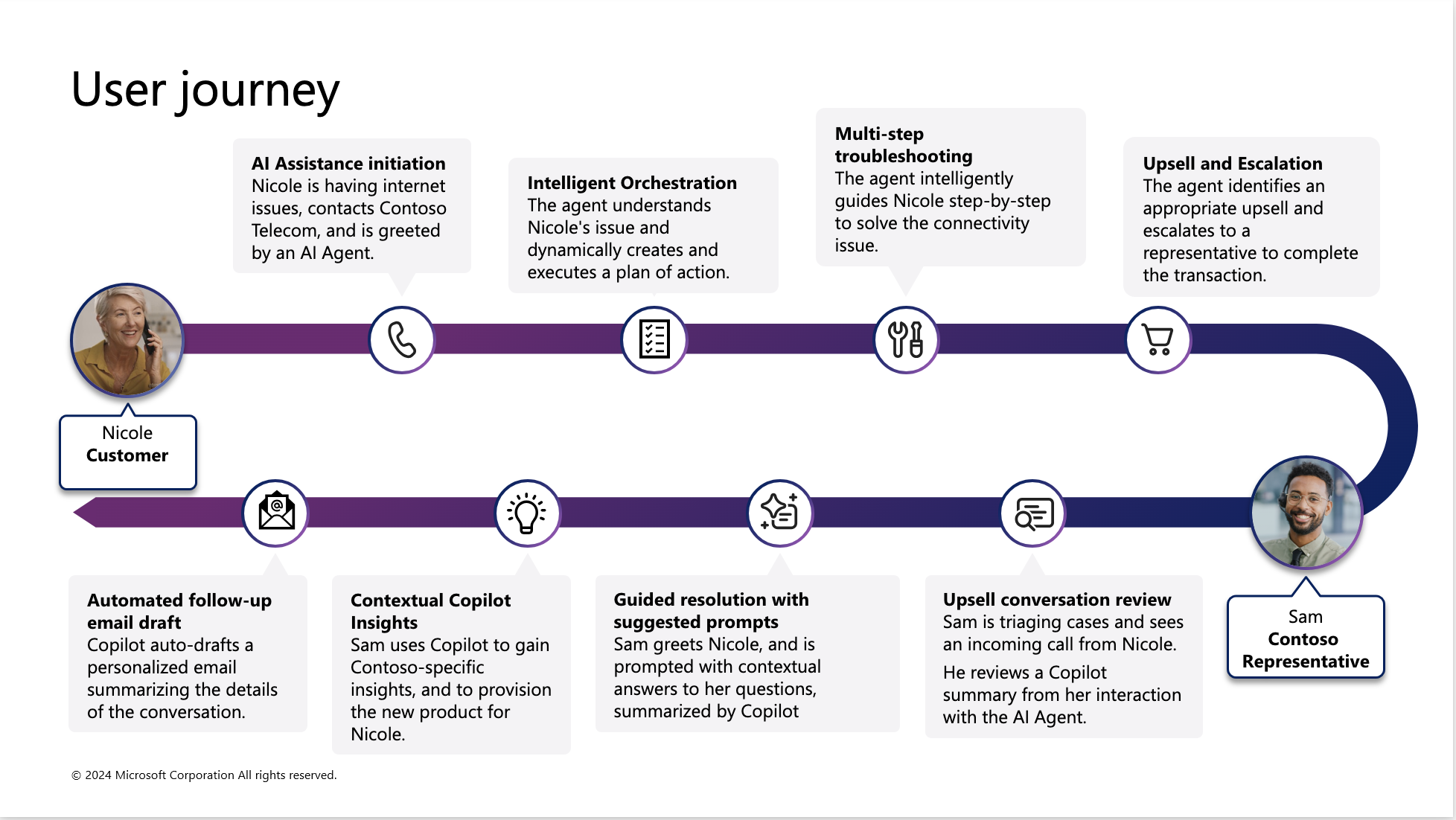
Designing for Voice, Chat & the Rep Workspace
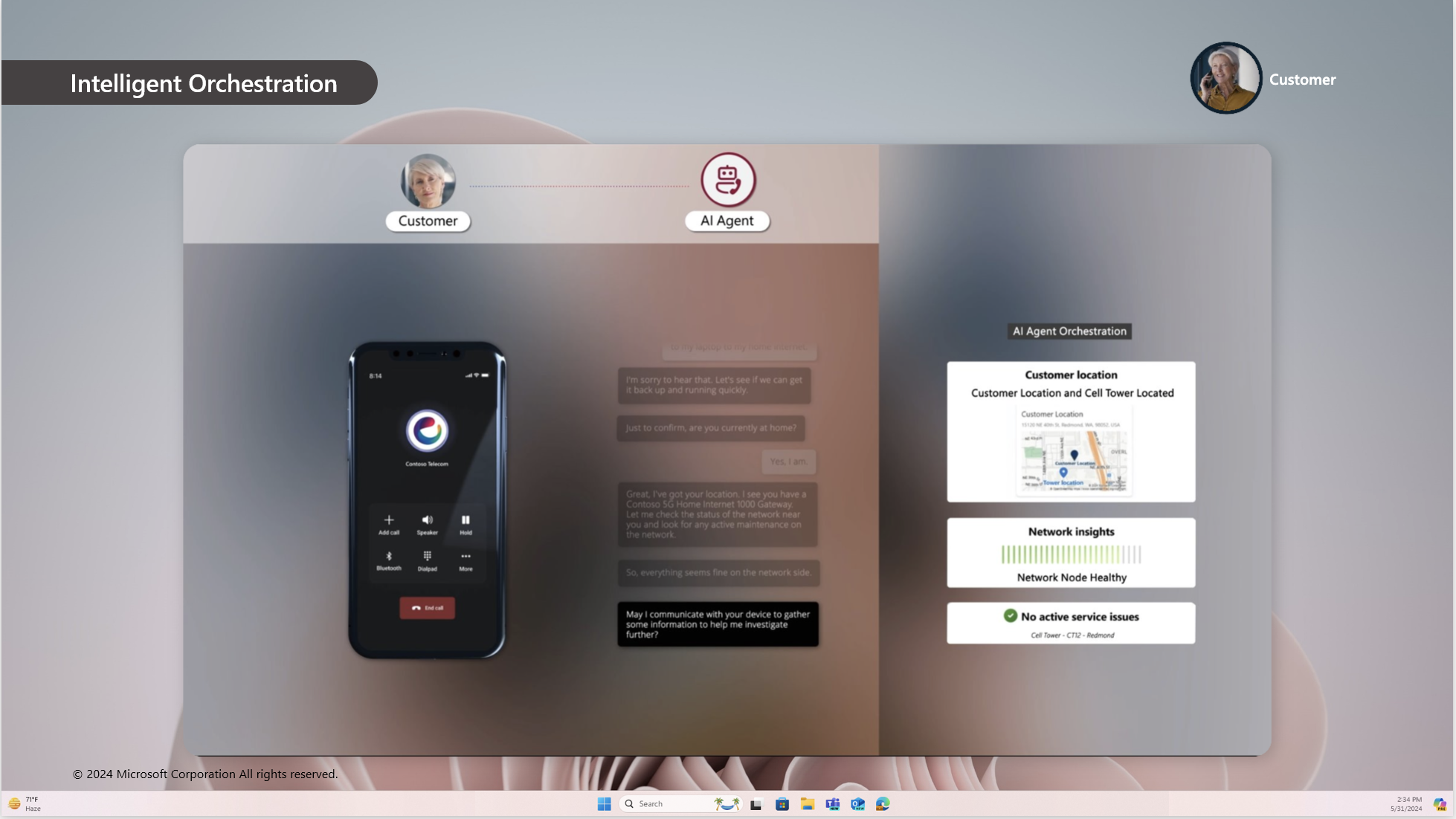
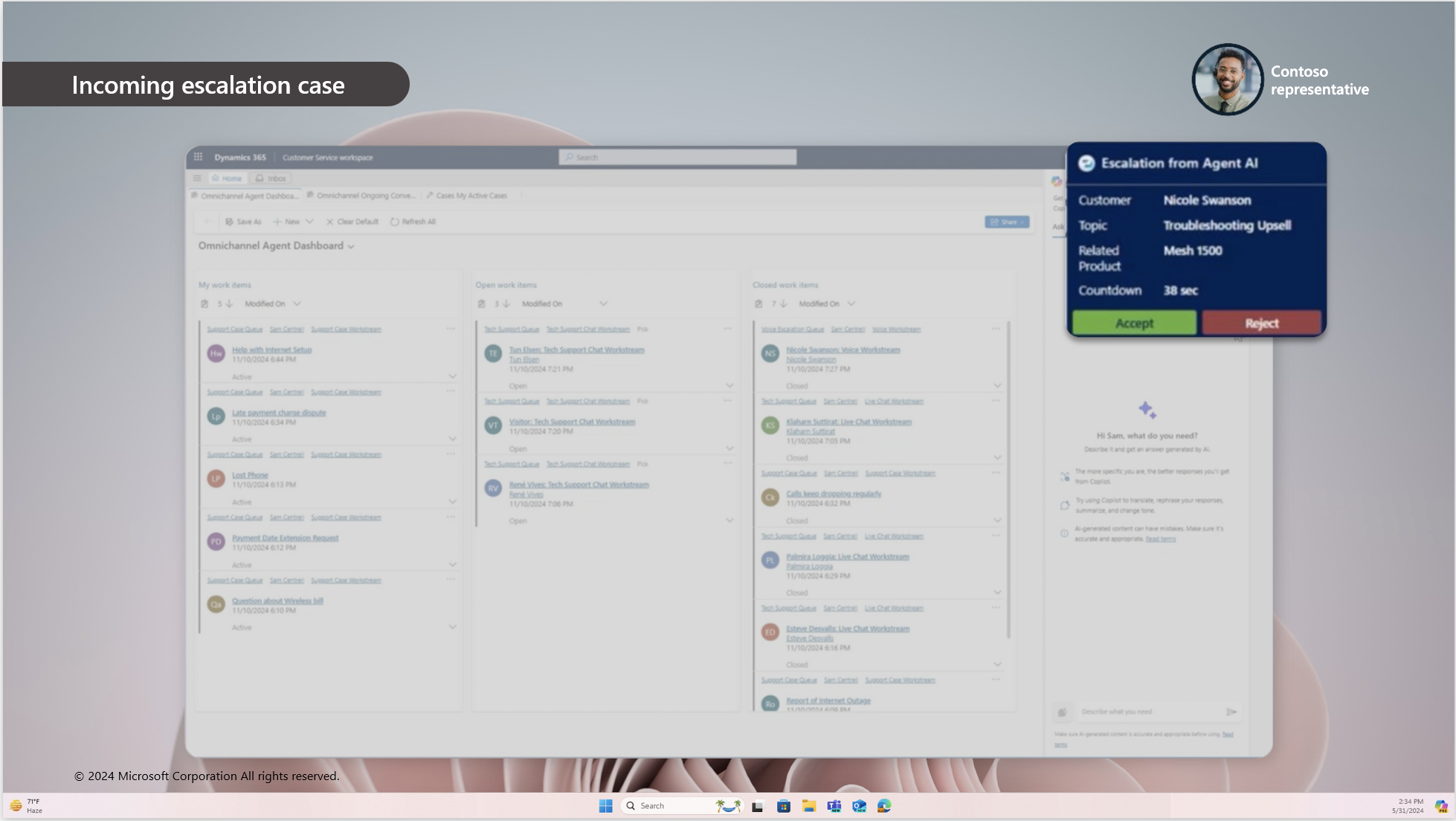
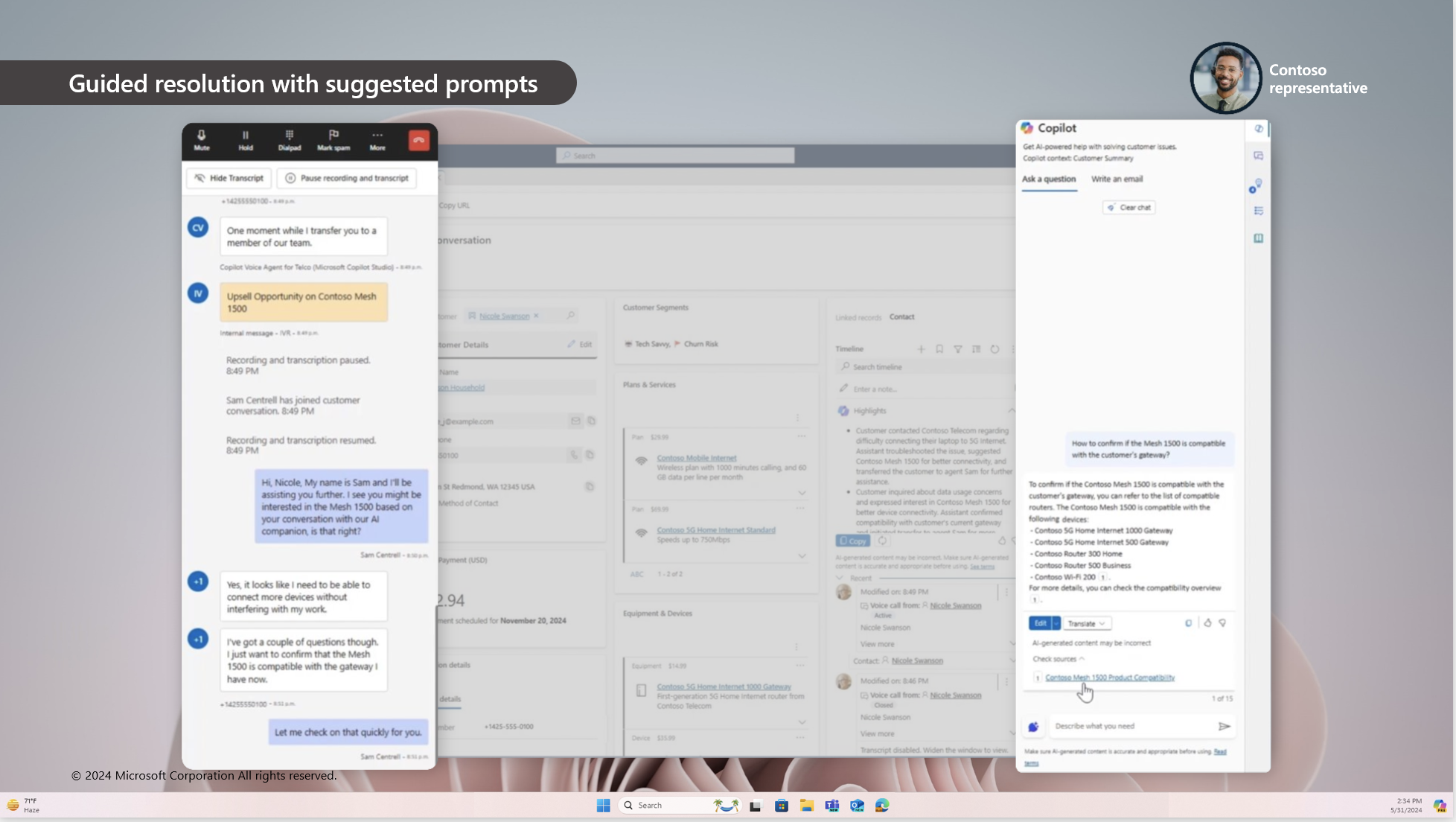
Through iterative design sessions, I helped design across three connected surfaces: the customer-facing voice/self-service channel, the representative’s Dynamics 365 workspace, and the Copilot panel that surfaces contextual insight in both.
Packaging
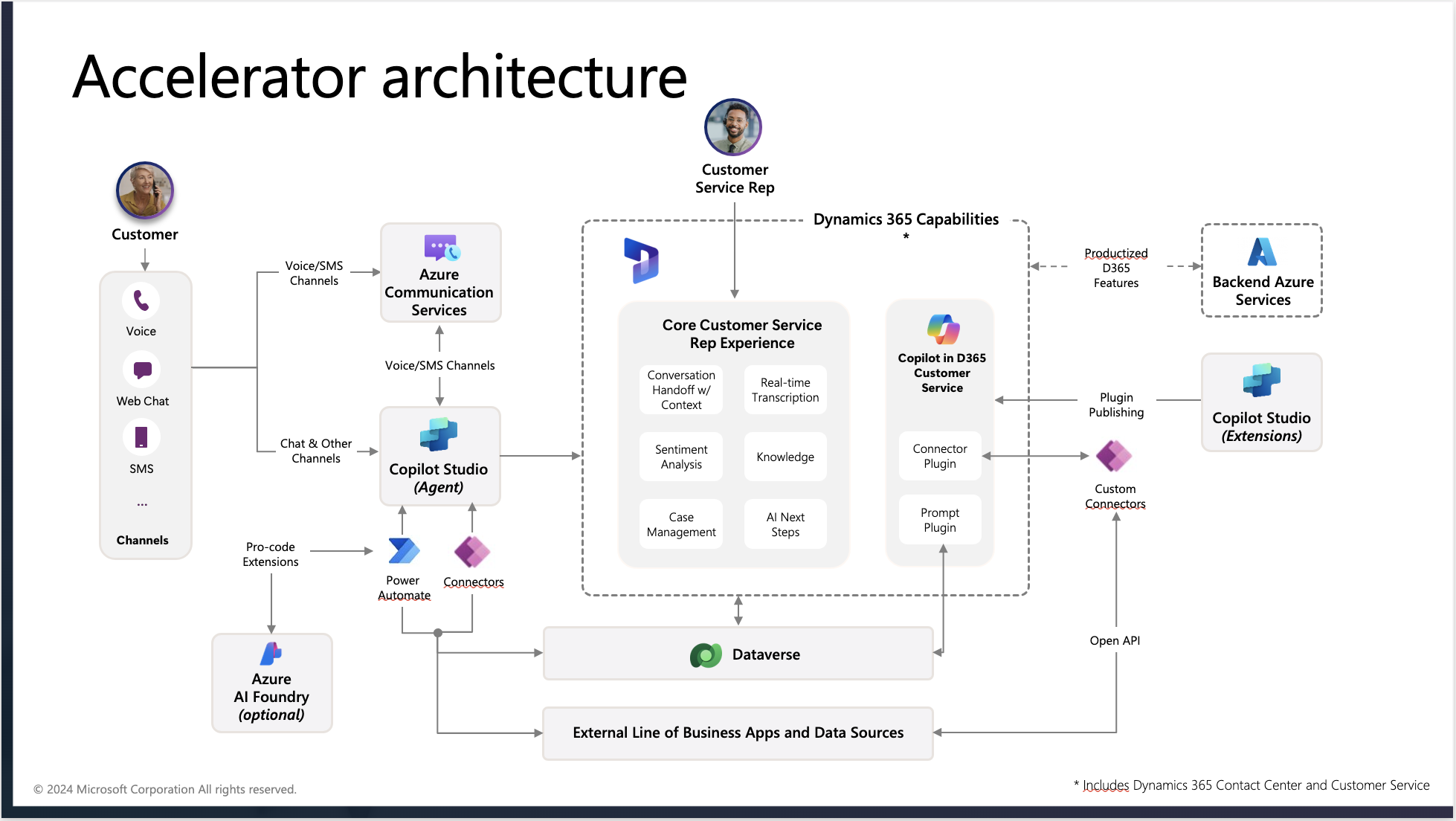
The architecture routes customers in through voice, web chat, and SMS via Azure Communication Services into a Copilot Studio agent, which hands off, with full context, into the representative’s Dynamics 365 workspace. There, a Core Customer Service Rep Experience (conversation handoff, real-time transcription, sentiment analysis, case management) works alongside Copilot in D365 Customer Service, both backed by Dataverse, external line-of-business systems, and productized D365 features.
Technical features: multi-channel intake (voice, web chat, SMS), Copilot Studio for agent build and customization, Dataverse and connector-based integration with external systems, and an optional Azure AI Foundry extension point for pro-code customization.
View the Enhanced Customer Care GitHub repository ↗
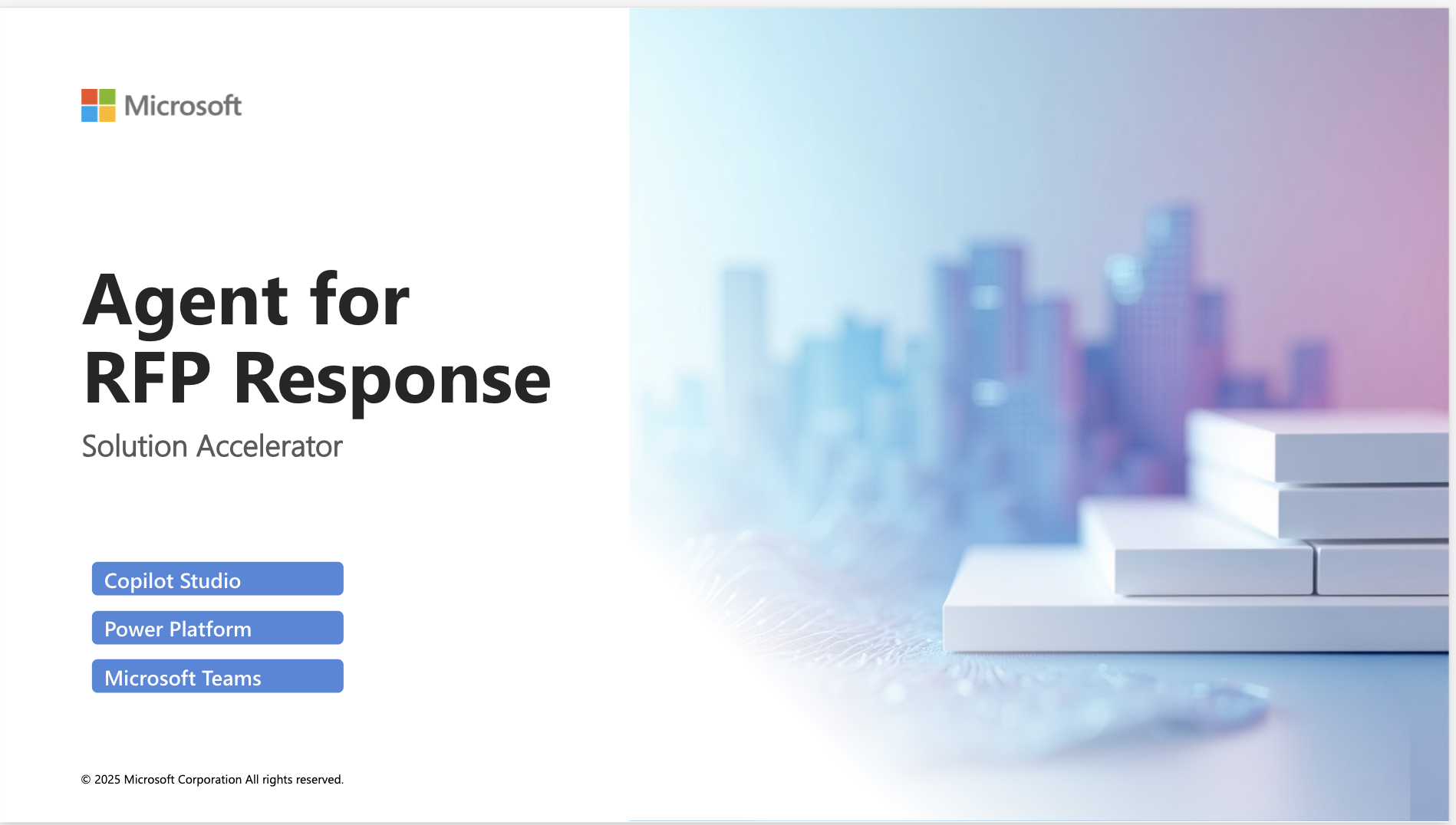
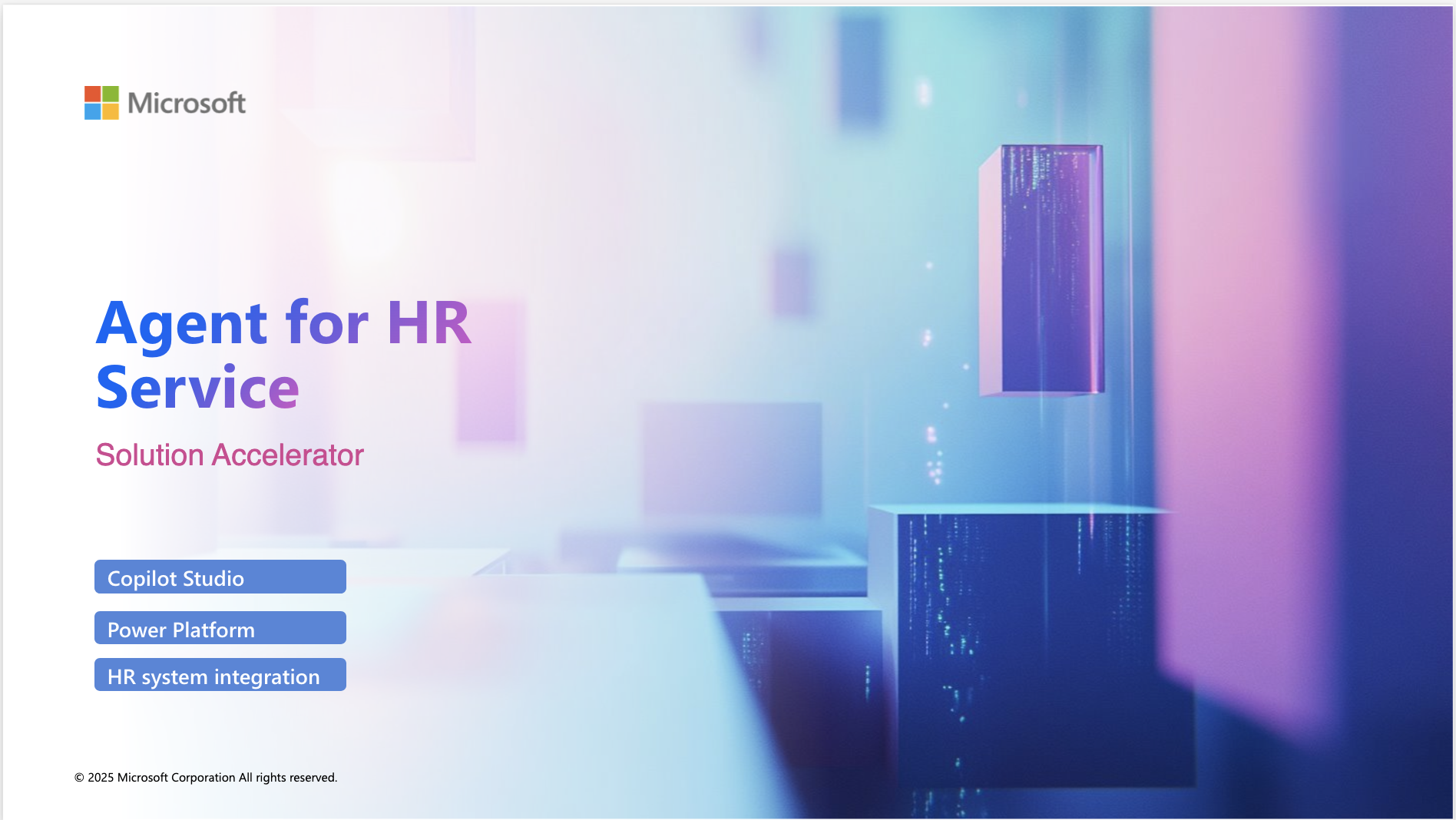
Four More Accelerators


Outcome
Faster Resolution
Higher first-contact resolution rates across support and self-service scenarios reduce repeated inquiries and speed up problem solving.
Reduced Operational Cost
Intelligent agents handle routine requests end-to-end, cutting manual workload and support ticket volume.
Employees Empowered
Real-time, AI-driven insight routes work to the right person and equips them to resolve it accurately the first time.
Higher Satisfaction
Clearer, faster responses build trust in the system for both the end user and the employee handling escalations.
Across the program: five production-ready accelerators shipped publicly across legal, sales, customer care, HR, and developer tooling, each built on the same repeatable Definition → Design → Packaging methodology. Running every accelerator through that same framework, rather than designing each one from scratch, is what made a five-accelerator program deliverable on this timeline at all.
Learnings
Ground agents in real user scenarios. Designing around a clear persona and use case ensures the agent solves a practical pain point rather than offering abstract automation.
Balance automation with transparency. Agents should reinforce user confidence with checkpoints and traceability, so people trust the system without feeling out of control.
Design for extensibility and integration. Successful AI agents connect seamlessly to the tools people already use (Teams, DocuSign, CRMs), so adoption feels additive, not disruptive.
Invest in a repeatable framework early. Standardizing every accelerator on the same Definition → Design → Packaging methodology paid off across the program: later accelerators reused proven personas, journey structures, and interaction patterns from earlier ones instead of starting cold, which shortened delivery time and kept design decisions consistent instead of accumulating design debt accelerator by accelerator.